
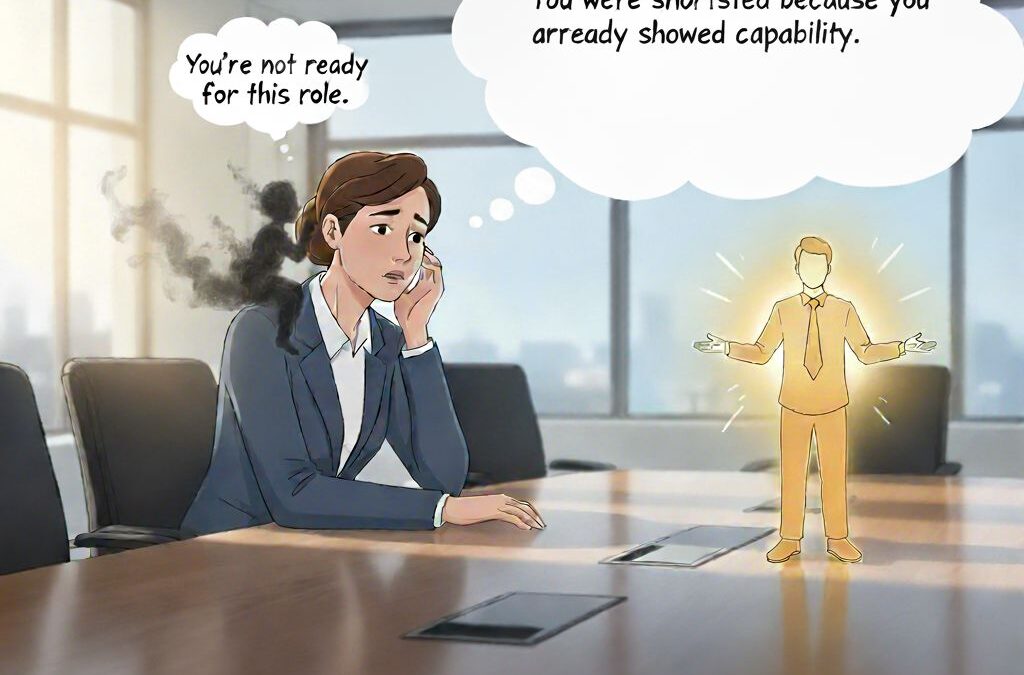
That little voice whispering, “You’re not ready for this role” … sound familiar?
Imposter syndrome often strikes hardest in the days leading up to an interview. It doesn’t matter whether you’re going for an APS3 graduate role or stepping up into an APS6 or EL1 leadership position—that self-doubt creeps in.
The good news? Feeling like an imposter doesn’t mean you are one. In fact, many high achievers—including APS leaders—experience the same inner critic.
Why Imposter Syndrome Shows Up Before Interviews
Interviews are high-stakes moments. You’ve already been through a rigorous selection process—shortlisting, application checks, and sometimes capability assessments. When you finally receive the interview invitation, your brain flips into survival mode.
It says:
- “What if they realise I don’t belong here?”
- “What if I can’t answer their behavioural questions?”
- “What if I fail?”
But here’s the truth: you were shortlisted because you have already demonstrated the required capabilities. Your written application showed evidence against the APS capability framework. The panel has already said “yes” on paper.
Reframing the Interview
One of the biggest mindset shifts I teach my clients is this:
👉 The interview isn’t a test of worthiness.
👉 It’s simply confirmation of what you’ve already demonstrated.
The panel is not looking to trip you up—they’re looking for alignment. They want you to succeed because it means their recruitment process worked. If you want deeper guidance, explore our APS Interview Coaching services.
When imposter thoughts surface, try reminding yourself:
“They’ve already seen I can do the job. Now I just need to let them see it in person.”
Practical Strategies to Quiet the Inner Critic
1. Anchor Yourself in Preparation
Build confidence through STAR-L examples (Situation, Task, Action, Result, and Learning). Preparing 2–3 solid examples for each APS Integrated Leadership System capability ensures you’ll have the right stories ready.
2. Normalise the Nerves
Almost every candidate—yes, even SES executives—feels nervous before interviews. Instead of fighting it, see nerves as energy. Channel it into enthusiasm when you speak.
3. Evidence File Technique
Keep a personal “evidence file.” Record achievements, feedback from managers, or metrics from projects. Reviewing this before your interview reminds you of the tangible value you bring.
4. Replace Doubt With Data
Imposter thoughts are emotional. Combat them with facts:
- “I was shortlisted from 100+ applications.”
- “My application highlighted measurable outcomes—reduced errors by 20%, improved stakeholder engagement, led a project team.”
- “I’ve already proven my value once.”
5. Use Positive Interview Rituals
Simple actions—breathing exercises, power poses, or rehearsing your opening introduction—can shift your state. These small rituals signal to your brain: “I’m ready.”
A Final Mindset Reframe
Remember: you don’t need to be perfect in the interview—you need to be authentic. The APS values integrity, collaboration, and resilience just as much as technical skills.
So the next time imposter syndrome whispers, try saying:
“I’m not here by accident. They’ve already said yes to me on paper. This interview is simply the final step to show them what they already believe—I can do this job.”
✅ Want to go deeper? Book a coaching session today or comment “ready” below, and I’ll share the exact mindset shifts I use with clients to quiet imposter syndrome before APS interviews.
#apsjobs #australianpublicservice #interviewtips #impostersyndrome #interviewconfidence