by APS Interview Coach | Mar 16, 2026 | APS Interview Coaching, Public Service News, Uncategorized
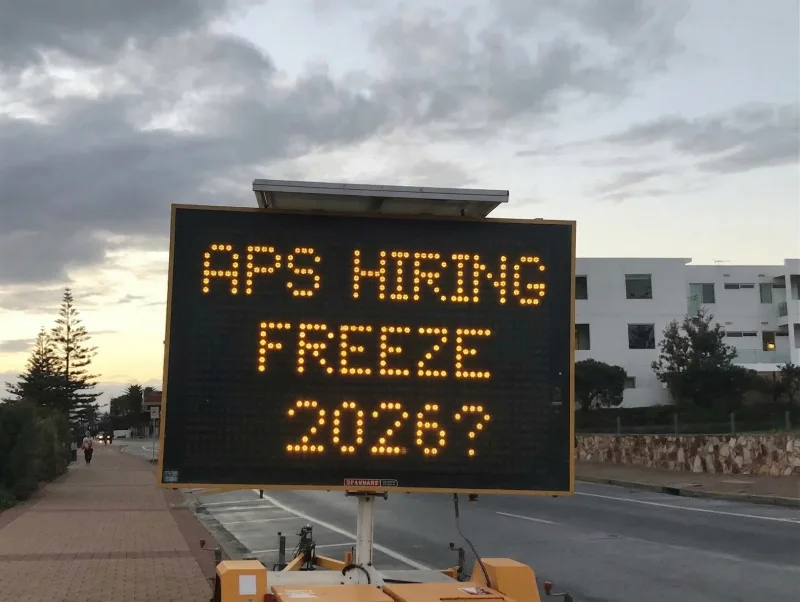
APS Hiring Freeze 2026: What Job Seekers Need to Know
Many candidates searching for Australian Public Service jobs in 2026 are hearing the phrase “APS hiring freeze”. While there is not a single formal government-wide freeze currently in place across all agencies, recruitment activity has clearly slowed.
Across multiple departments, agency leaders have been asked to identify budget savings and prioritise essential spending. In response, some agencies have reduced contractor numbers, delayed recruitment rounds, or paused hiring for non-essential roles. These changes have created the perception of a hiring freeze in parts of the public service.
Reports in late 2025 confirmed that federal agencies were instructed to identify savings of up to 5 per cent within their budgets, prompting reductions in project spending and slower recruitment activity across departments.
At the same time, several state governments have also begun tightening public sector spending. For example, the Victorian Government announced plans to reduce more than 1000 public sector jobs as part of a broader effort to control workforce costs and reduce debt.
These changes do not necessarily mean that government recruitment has stopped. However, they do mean that:
- Fewer roles are being advertised externally
- Internal candidates are increasingly competing for positions
- Agencies are relying more heavily on merit pools and internal mobility
- Competition for advertised roles has increased significantly
Why Competition for APS Jobs Is Increasing
Even when recruitment slows, the demand for public sector jobs remains extremely strong. Government roles are attractive because they offer job stability, structured career progression, and competitive salaries.
When fewer vacancies are advertised, application volumes increase dramatically. It is now common for APS and State Government roles to receive hundreds of applications.
This is one of the main reasons why many agencies use Applicant Tracking Systems such as PageUp to screen applications before they reach a human panel.
If your application is not clearly aligned with capability frameworks such as the APS Integrated Leadership System and Work Level Standards, it may never progress to the interview stage.
You can learn more about preparing for these structured interviews here:
APS STAR Interview Method Guide
What This Means for Applicants in 2026
For candidates pursuing APS or State Government roles, the tightening job market means preparation is more important than ever.
Applicants who rely on generic resumes or basic interview preparation are often filtered out early in the recruitment process.
Candidates who invest time in understanding government capability frameworks, structuring strong STAR responses, and aligning their experience to the expectations of the role have a much stronger chance of progressing through the recruitment process.
If you would like support preparing for an APS interview, you can explore available services here:
Government Interview Coaching Services
by APS Interview Coach | Mar 16, 2026 | APS Interview Coaching, APS Interviews, APS PageUp Ai ATS
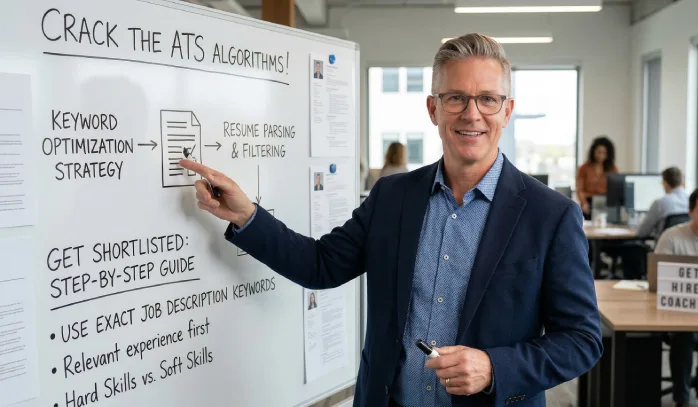
How to Beat the ATS Algorithms and Get Shortlisted
To beat the automated algorithms and avoid the high filter-out rate that many applicants experience, you must move away from generic applications.
Because some government roles now receive hundreds of applications, Applicant Tracking Systems (ATS) are often used as the first stage of screening. These systems scan resumes, pitch statements and selection criteria responses before a human panel reviews them.
Candidates who submit generic applications often never reach the interview stage.
To bypass this digital screening layer and get shortlisted, you need to structure your application strategically.
Below are the methods experienced government recruiters expect to see.
Calibrate Your Application to Government Capability Frameworks
Your resume and selection criteria responses must align directly with the capability frameworks used by government agencies.
For federal roles, this includes:
- APS Integrated Leadership System (ILS)
- APS Work Level Standards
The Integrated Leadership System provides capability development guidance for individuals and agencies, including behavioural descriptions expected at each APS classification level. [1]
Work Level Standards then define the responsibilities, complexity and expectations associated with each APS classification. [2]
If your examples do not clearly demonstrate the behavioural indicators associated with the relevant level, panel members will not score them highly.
You can review practical examples of framework-aligned responses here:
https://psinterviewcoach.com.au/star-method-interview-aps/
Build Responses Around Government Scoring Matrices
Government interviews are not subjective conversations.
They are structured scoring exercises.
Panels use detailed grading matrices to evaluate candidates against specific behavioural indicators. Each answer is scored according to how well it demonstrates the capability being assessed.
Former government executives who have chaired recruitment panels understand exactly how these matrices work.
When preparing for an interview, your responses should be structured so that each example clearly demonstrates:
- the capability being assessed
- The complexity expected at your classification level
- measurable outcomes
- leadership behaviours where relevant
This dramatically improves your scoring potential.
Optimise Your Resume for ATS Systems
A government resume must be structured differently from a private sector resume.
Applicant Tracking Systems evaluate formatting, keyword alignment and capability language before applications reach human reviewers.
To ensure your resume passes ATS filtering, it should include:
- capability aligned keywords
- clearly structured responsibilities and outcomes
- terminology aligned to the classification level of the role
Candidates preparing applications can review professional resume guidance here:
https://psinterviewcoach.com.au/aps-resume-services/
Craft Selection Criteria That Demonstrate Capability
Selection criteria responses are one of the most important elements of a government job application.
These responses must demonstrate capability using the STAR method, but they must also align with the behavioural expectations of the framework used by the hiring agency.
A strong response typically includes:
- a clear situation or challenge
- Your specific role and responsibility
- the actions you personally took
- measurable outcomes that demonstrate impact
You can learn more about developing strong responses here:
https://psinterviewcoach.com.au/selection-criteria/
Use Professional Coaching or Independent Application Audits
Many candidates underestimate how competitive government recruitment processes have become.
Professional preparation can significantly improve application quality and interview performance.
Specialised services such as PS Interview Coach offer structured preparation tools that help candidates refine their applications.
AI Content Performance Audits
Programs such as Performance Core and Excellence include deep analysis of competency responses to ensure they align with capability frameworks and interview scoring structures.
Rapid Strategy Sessions
Short intensive consultations can review your STAR examples and recalibrate your responses to align with the APS Integrated Leadership System and relevant Work Level Standards.
Self-Guided Strategy Systems
Candidates who prefer independent preparation can access structured resources, including preparation guides, example responses and strategy frameworks.
Explore the available services here:
https://psinterviewcoach.com.au/interview-services/
The Experience Behind PS Interview Coach
PS Interview Coach is built around the practical experience of former government recruitment decision makers.
The coaching team includes former Australian Public Service executives who have chaired and participated in government interview panels.
This background provides valuable insight into:
- How panel scoring systems operate
- How capability frameworks are applied during recruitment
- How selection criteria responses are evaluated
The Integrated Leadership System used in APS recruitment provides behavioural descriptions and capability expectations across all levels of the public service. [1]
Because of this insider knowledge, coaching focuses on helping candidates structure responses in a way that aligns with the frameworks and scoring matrices used by government panels.
Candidates interested in learning more about the team can read about their approach here:
https://psinterviewcoach.com.au/why-hire-us/
Final Thought
The biggest mistake candidates make is assuming government recruitment works like private sector hiring.
It does not.
Government hiring is structured, scored and highly framework-driven.
If you move away from generic applications and instead align your responses precisely with capability frameworks and scoring matrices, you dramatically increase your chances of being shortlisted.
In a market where some roles receive hundreds of applications, that strategic alignment can be the difference between repeated rejection and securing your next promotion.
Friendly Reminder
While the strategies discussed in this article reflect current best practice for government job applications, it is important to understand that following any advice in this blog does not guarantee a successful outcome.
Australian Public Service and State Government recruitment processes involve multiple factors that are outside any applicant’s control. These can include the strength of competing candidates, internal applicants, agency priorities, panel preferences, and the scoring process used during recruitment.
Many government hiring processes are structured around capability frameworks such as the APS Integrated Leadership System and Work Level Standards, which define behavioural expectations and work complexity at each classification level. Even when candidates prepare strong applications aligned to these frameworks, final outcomes will always depend on the overall merit assessment conducted by the hiring panel.
At PS Interview Coach, our guidance is based on extensive experience with public sector recruitment processes and reflects the best practices used by many successful candidates. Our goal is to help applicants present their experience clearly, align their responses with government capability frameworks, and improve their confidence in interviews.
However, no preparation method can guarantee success through either automated screening systems or human assessment panels. Every recruitment process is unique, and final decisions always remain with the hiring agency.
Think of the strategies in this guide as tools to improve your competitiveness and preparation, not as a guarantee of an offer.
If you would like personalised feedback on your resume, selection criteria, or interview preparation, you can explore our services here:
APS & Government Interview Coaching

by APS Interview Coach | Mar 16, 2026 | APS Interview Coaching
APS & State Gov Job Cuts 2026: Why Securing a Government Job Just Got Harder (And How to Beat the Odds)
If you’re trying to secure a role or win a promotion in the Australian Public Service (APS) or State Government in 2026, you’ve probably already noticed something has changed.
The public sector hiring landscape is becoming increasingly competitive. Budgets are under pressure, agencies are being asked to identify efficiency savings, and recruitment is slowing across multiple jurisdictions.
The result?
Fewer jobs are being advertised, and far more applicants are competing for every role.
For serious candidates, this means the margin between success and rejection is now razor-thin.
Here’s what’s happening in the government job market—and how to give yourself a genuine competitive edge.
The 2026 Public Sector Reality: Budget Pressure and Hiring Slowdowns
Across Australia, governments are actively searching for ways to reduce spending and improve efficiency.
Federal departments have been instructed to identify up to 5% in savings, which has triggered fears of workforce reductions and hiring slowdowns across the APS. (ABC News)
While large-scale layoffs have not been formally announced, agencies have responded by:
- Reducing contractor numbers
- Pausing recruitment for non-essential roles
- Delaying or cancelling planned hiring rounds
At the state level, similar cost-cutting measures are already underway.
For example, the Victorian Government has announced plans to cut more than 1,000 public sector jobs as part of a $4 billion savings plan, with many reductions focused on senior roles. (ABC News)
Even where jobs are not being eliminated outright, departments are increasingly relying on:
- natural attrition
- internal mobility
- temporary acting arrangements
This means fewer externally advertised roles.
The Hidden Impact: Record Application Volumes
When job numbers fall, but demand remains high, the inevitable result is application saturation.
Across the APS and state government recruitment systems, many advertised roles are now receiving hundreds of applications.
It is increasingly common for roles to attract:
- 250–400 applicants
- multiple internal candidates
- applicants from contractors transitioning to permanent roles
- interstate applicants competing remotely
Before a human hiring panel even reviews your application, Applicant Tracking Systems (ATS) such as PageUp are often used to filter responses.
If your resume, pitch, or selection criteria do not align with the expected government frameworks, your application may never reach the interview stage.
If you want to understand how these systems filter candidates, read our guide:
https://psinterviewcoach.com.au/aps-ai-recruitment-tips/
Why “Standard STAR Answers” Are No Longer Enough
Many candidates believe that simply using the STAR method (Situation, Task, Action, Result) is enough to succeed.
Unfortunately, most applicants use STAR incorrectly or too generically.
High-scoring APS responses require:
- precise alignment to capability frameworks
- measurable outcomes
- strong leadership behaviours
- strategic thinking appropriate to the classification level
If you’re unfamiliar with how to structure these responses effectively, review our guide here:
https://psinterviewcoach.com.au/star-method-interview-aps/
Or explore additional preparation resources in our:
https://psinterviewcoach.com.au/aps-interview-tips-resources/
Government Interviews Are Scored Against Capability Frameworks
Government recruitment panels assess candidates using structured frameworks such as:
- APS Integrated Leadership System (ILS)
- State Government capability frameworks
- behavioural competency indicators
- formal scoring matrices
Your responses must demonstrate evidence of behaviours expected at your classification level.
For example:
Entry-Level APS Roles
APS3–APS4 applicants must demonstrate operational capability and teamwork.
https://psinterviewcoach.com.au/aps-3-4-interview-coaching/
Mid-Level APS Roles
APS5 and APS6 candidates must demonstrate independent judgment and stakeholder engagement.
https://psinterviewcoach.com.au/aps-5-interview-coaching/
https://psinterviewcoach.com.au/aps-6-interview-coaching/
Executive Roles
EL1 and EL2 interviews require strategic leadership, governance insight, and policy influence.
https://psinterviewcoach.com.au/executive-interview-coaching/
https://psinterviewcoach.com.au/aps-executive-level-el1-el2-insights/
Understanding the expectations at your level is critical to scoring highly in interviews.
State Government Competition Is Increasing Too
State government recruitment has become just as competitive as federal APS hiring.
Each jurisdiction has its own capability frameworks and classification structures.
Our coaching programs provide specialised preparation for:
NSW Government
https://psinterviewcoach.com.au/nsw-government-interview-coaching/
Victorian Public Service
https://psinterviewcoach.com.au/vps-interview-coaching/
Queensland Public Sector
https://psinterviewcoach.com.au/qld-public-sector-interview-coaching/
ACT Government
https://psinterviewcoach.com.au/act-government-interview-coaching/
If you are transitioning from the private sector, you may also find this guide useful:
https://psinterviewcoach.com.au/private-to-public/
Why Professional Interview Coaching Is Becoming Essential
When hundreds of applicants compete for a single role, being “good enough” is no longer enough.
You must be able to:
- Translate your experience into government capability language
- deliver concise, high-impact STAR responses
- Demonstrate leadership behaviours appropriate to your level
- anticipate panel scoring expectations
Professional coaching provides an advantage by helping candidates:
✔ Decode the scoring frameworks
✔ Structure stronger behavioural responses
✔ Improve executive communication
✔ Avoid common panel scoring traps
How PS Interview Coach Helps Candidates Win Roles
At PS Interview Coach, our coaching is delivered by former government hiring managers and executives with over 40 years of combined recruitment experience.
Our services include:
Interview coaching
https://psinterviewcoach.com.au/interview-services/
Selection criteria and pitch writing
https://psinterviewcoach.com.au/selection-criteria/
APS resume optimisation
https://psinterviewcoach.com.au/aps-resume-services/
You can also review real success stories from clients here:
https://psinterviewcoach.com.au/coaching-case-studies/
The Real Cost of Delaying Your Promotion
Many candidates underestimate the financial impact of a delayed promotion.
If you miss an APS6 or EL1 opportunity by just one year, the lost salary difference can easily exceed $10,000–$25,000 annually.
In a tightening recruitment market, investing in professional preparation can significantly accelerate your career progression.
Ready to Give Yourself a Competitive Edge?
If you’re preparing for an upcoming APS or State Government interview, the best step you can take is to speak with an expert.
Book a free consultation with PS Interview Coach today:
https://psinterviewcoach.com.au/free-consultation/
Or explore our pricing options:
https://psinterviewcoach.com.au/pricing/
Because in a market where hundreds of applicants compete for every role, preparation is no longer optional.
It’s your competitive advantage!

by APS Interview Coach | Mar 5, 2026 | APS Interview Coaching, APS PageUp Ai ATS
Most APS resumes fail before a human reads them. Not because the applicant lacks experience, but because PageUp, the applicant tracking system used by most APS agencies, cannot find the keywords it is looking for. This guide shows you exactly which keywords to use, how to write selection criteria that satisfy both the ATS and the panel, and how to stand out in government job applications in Australia in 2025.
Whether you are applying at APS3, APS6, or Executive Level, the same principles apply: mirror the language of the job advertisement, use the correct ILS capability names, and back every claim with specific, quantified evidence.
Contents
- How PageUp Reads Your APS Resume
- The APS Resume Keyword Strategy for 2025
- The ILS Capability Framework: What Goes in Your Resume
- How to Write APS Selection Criteria Using the STAR Method
- Worked STAR Example: Achieves Results
- Can AI Help With Your APS Application?
- How to Stand Out in Government Job Applications in Australia
- Capability Framework Quick Reference by Jurisdiction
- Frequently Asked Questions
How PageUp Reads Your APS Resume
PageUp is the applicant tracking system (ATS) used by the majority of Australian Public Service agencies. When you upload your resume, PageUp parses the document — extracting the text and comparing it to the keywords and phrases in the job advertisement. It then assigns a relevance score. Applications that score below a threshold are ranked lower in the shortlist queue, often before a human panel reviews them.
Understanding how PageUp reads your document is the first step to making sure it reads it correctly.
File Format
Submit your resume as a .docx file wherever possible. PageUp parses Word documents more reliably than PDFs. PDFs — particularly those generated from scanned documents or built with complex design software — can produce garbled text when parsed, causing critical information to be missed or misread entirely. If the application only accepts PDF, export directly from Word rather than using a designer tool.
Layout and Formatting
PageUp’s parser reads text in a linear, left-to-right, top-to-bottom sequence. Any formatting that breaks this flow will cause parsing errors. Avoid the following in your APS resume:
- Tables — content inside table cells is often skipped or read out of order
- Multiple columns — the parser reads column 1 fully before column 2, which can place your job titles next to the wrong dates
- Text boxes — content inside text boxes is frequently invisible to the parser
- Headers and footers — your name and contact details placed here may not be read
- Decorative fonts and icons — these can be rendered as unreadable characters
- Embedded images of text — the parser cannot read images
Use a clean, single-column layout. Use standard headings: Work Experience, Education, Skills, Professional Development. Use Arial, Calibri, or Georgia at 10–12pt. Keep margins at 2cm or wider. Name your file clearly: Firstname-Lastname-Resume-APS-RoleTitle.docx.
Length
APS resumes should be two to four pages, depending on level. At APS3–APS5, two to three pages are appropriate. At APS6 and EL1, three to four pages is standard. Senior Executive Service (SES) resumes may extend to five pages. Remove roles older than 15 years unless directly relevant to the position.
→ See our APS Resume Services for expert resume review and rewriting
The APS Resume Keyword Strategy for 2025
PageUp performs keyword matching between your resume text and the job advertisement. The closer the language in your resume matches the language in the advertisement and selection criteria, the higher your match score. This is the single most impactful optimisation you can make to your APS resume in 2025.
Step 1 — Extract Keywords from the Job Advertisement
Before writing or updating your resume, copy the full text of the job advertisement — including the position overview, key duties, and selection criteria — into a separate document. Then highlight:
- Every capability name (from the ILS or relevant state framework)
- Every action verb (e.g. lead, develop, coordinate, advise, analyse)
- Every technical term specific to the role (e.g. budget management, stakeholder engagement, policy development, legislative compliance)
- Every tool or system named (e.g. SAP, Objective, TRIM, Salesforce)
These highlighted terms are your target keywords. Every one of them should appear at least once in your resume — verbatim, not paraphrased.
Step 2 — Check for Exact Phrase Matches
PageUp performs literal phrase matching, not semantic matching. This means it does not understand that “manages stakeholder relationships” and “stakeholder engagement” refer to the same skill. If the job advertisement uses “stakeholder engagement,” your resume must use “stakeholder engagement” — not “stakeholder management,” not “relationship management.”
This is particularly important for ILS capability names. If the advertisement lists “Communicates with Influence” as a selection criterion, that exact phrase must appear in your resume or pitch. A synonym will not score.
Step 3 — Distribute Keywords Across Your Resume
Do not cluster all keywords in one section. Distribute them naturally across:
- Professional summary/career profile (top of the document — PageUp weights early content more heavily)
- Key skills or capabilities section (a short list of 8–12 capabilities and technical terms)
- Each role description — use keywords in context within bullet points
Aim for your top five keywords to appear two to three times across the document. Do not exceed this — keyword stuffing is detectable and will cost you credibility with the human panel.
Step 4 — Use the APS Work Level Standards Language
The APS Work Level Standards describe the expected behaviours and outputs at each classification level. Agencies use this language directly in job advertisements. Familiarise yourself with the Standards at your target level and incorporate the exact phrases into your resume descriptions.
For example, at APS6, the Work Level Standards use phrases such as “exercising a degree of independent judgment,” “providing advice and analysis,” and “contributing to team and branch outcomes.” These phrases belong in your resume if you are applying at APS6.
→ Browse our APS Interview Tips and Resources library
The ILS Capability Framework: What Goes in Your Resume
The Integrated Leadership System (ILS) is the APS capability framework. It defines the behaviours and characteristics expected of effective APS leaders and employees at each classification level. The ILS capability names appear directly in APS job advertisements and are the primary keywords PageUp is scanning for.
There are five core ILS capability clusters. Each cluster contains specific capabilities that are described in behavioural terms. The exact names below are the phrases that must appear in your resume and pitch — not paraphrases.
The Five ILS Capability Clusters
1. Shapes Strategic Thinking
- Inspires a sense of purpose and direction
- Focuses strategically
- Harnesses information and opportunities
- Shows judgment, intelligence and common sense
2. Achieves Results
- Builds organisational capability and responsiveness
- Marshals professional expertise
- Steers and implements change and deals with uncertainty
- Delivers intended results
3. Supports Productive Working Relationships (APS1–EL1) / Cultivates Productive Working Relationships (EL2 and above)
- Nurtures internal and external relationships
- Facilitates cooperation and partnerships
- Values individual differences and diversity
- Guides, mentors and develops people
4. Exemplifies Personal Drive and Integrity
- Demonstrates public service professionalism and probity
- Engages with risk and shows personal courage
- Commits to action
- Displays resilience
- Demonstrates self-awareness and a commitment to personal development
5. Communicates with Influence
- Communicates clearly
- Listens, understands and adapts to the audience
- Negotiates persuasively
How to Embed ILS Capability Names in Your Resume
Do not list ILS capabilities as a standalone section. Instead, embed the capability names within your role descriptions and achievement statements so they appear in context. This satisfies the PageUp keyword scan and provides the human panel with evidence in the same sentence.
Weak (capability named, no evidence):
Demonstrated Achieves Results and Communicates with Influence across multiple projects.
Strong (capability named with evidence):
Led a cross-divisional project team to deliver a revised procurement framework three weeks ahead of schedule, demonstrating Achieves Results under competing resource and stakeholder pressures. Communicated with Influence by presenting the framework to the Executive Leadership Group and securing unanimous approval at the first submission.
The second version uses the exact ILS capability names and immediately provides specific, verifiable evidence. PageUp scores the keyword; the panel sees the capability in action.
→ Get expert help with APS selection criteria writing
How to Write APS Selection Criteria Using the STAR Method
The STAR method — Situation, Task, Action, Result — is the standard structure for APS selection criteria responses. Most APS roles at APS3 and above require applicants to address selection criteria, either through a pitch statement submitted in PageUp or through written responses to targeted questions. The STAR method provides the structure; your specific, first-person evidence provides the substance.
Situation (2–3 sentences)
Set the context for your example. Name the agency or organisation (you can say “a Commonwealth agency” if required for privacy), the nature of the role, the size of the team, and the challenge or context that makes this example relevant. Keep this section brief — its purpose is to orient the reader, not to tell the full story.
What to include: agency type, team size, the problem or context, the stakes.
What to avoid: unnecessary background, vague descriptions, anything that does not directly set up the Task.
Task (1 sentence)
State your specific, individual responsibility in this situation. This is the most commonly mishandled section of a STAR response. Many applicants describe what the team was responsible for rather than what they personally were accountable for. The APS merit principle requires you to demonstrate your individual capability — not the team’s.
Use first person singular: “I was responsible for…” or “My role was to…”
Action (4–6 sentences)
This is the longest and most important section. Describe in specific detail what you personally did: the steps you took, the decisions you made, the stakeholders you engaged, the methods or frameworks you applied, and the challenges you navigated. Use first-person active verbs throughout.
Strong action verbs for APS applications include: led, developed, designed, implemented, advised, coordinated, negotiated, analysed, presented, facilitated, drafted, managed, resolved, built, and delivered.
This is also the section where ILS capability language appears most naturally. If the criterion is “Communicates with Influence,” your action sentences should describe communication activities: presentations, written advice, negotiations, and briefings.
Result (1–2 sentences)
State the outcome of your actions. Quantify wherever possible — this is the element most often missing from APS selection criteria responses, and its absence weakens even a well-structured example.
Ways to quantify a result:
- Numbers: “reduced processing time by 30 per cent”
- Scale: “delivered to 1,200 staff across six sites”
- Timeframes: “completed three weeks ahead of schedule”
- Recognition: “commended by the Deputy Secretary” or “adopted as agency-wide policy”
- Ongoing impact: “The framework has been in continuous operation since 2023 with no significant amendments”
If you genuinely cannot quantify, describe who benefited, what changed, and what has sustained as a result of your actions.
→ See our full STAR Method guide for APS applications and interviews
Worked STAR Example: Achieves Results (APS Policy Context)
The following is a complete, publishable STAR example written for the ILS capability “Achieves Results” in an APS policy context. It is approximately 190 words — appropriate for a written selection criteria response at APS5–EL1 level.
Working as a Senior Policy Officer within a federal regulatory agency, I was a member of a cross-agency working group tasked with reviewing and updating the department’s grants assessment framework following an internal audit that identified significant inconsistencies in decision-making processes.
I was individually responsible for developing the revised assessment criteria, designing the stakeholder consultation approach, and drafting the final framework document for Executive consideration.
To Achieves Results within the 10-week project window, I developed a staged consultation plan that prioritised the four peak body stakeholders whose feedback had historically delayed previous policy processes. I facilitated three structured workshops using an interest-based negotiation model, mapped each stakeholder’s core concern against the draft criteria, and resolved six substantive objections through targeted redrafting. I also managed the project timeline independently while my immediate supervisor was on extended leave, escalating one significant risk to the Deputy Secretary with a recommended mitigation strategy that was approved without amendment.
The revised framework was adopted in full by the Senior Executive Committee and has since reduced average grants assessment time by 22 per cent, as measured in the department’s 2024–25 annual performance report.
What this example does well:
- Name the agency type and team context (cross-agency working group)
- Clearly states individual accountability in the Task sentence
- Uses first-person active verbs throughout (developed, designed, drafted, facilitated, mapped, resolved, managed, escalated)
- Names the ILS capability “Achieves Results” once, naturally embedded in the Action section
- Closes with a specific, independently verifiable quantified result (22 per cent reduction, cited source)
- Total word count: approximately 190 words — within the typical selection criteria word limit per criterion
Can AI Help With Your APS Application?
AI tools — including ChatGPT, Claude, Gemini, and Copilot — can assist with certain parts of your APS application. They cannot replace the human judgment, personal evidence, and APS-specific expertise that your application ultimately requires.
What AI Can Do Well
- Generate a draft structure — AI can produce a STAR template or pitch outline based on a job advertisement you provide
- Check grammar and tone — AI is effective at identifying grammatical errors, passive voice, and overly complex sentence structures
- Suggest keywords — if you provide the full job advertisement, AI can identify the capability names and technical terms you should be targeting
- Rephrase weak sentences — AI can improve clarity and directness in sentences you have already drafted
- Identify gaps — AI can compare your draft against the selection criteria and flag sections that are thin on evidence
What AI Cannot Do
- Write your STAR examples — AI does not know what you did, where you worked, who you worked with, or what you achieved. Any STAR example an AI generates is fictional and will be generic
- Demonstrate your individual merit — the APS merit principle requires evidence of your specific, personal capability. AI-generated evidence is not your evidence
- Match PageUp keywords reliably — AI tools do not have current access to how PageUp scores applications at specific agencies. Keyword optimisation requires knowledge of the specific job advertisement
- Replace specialist coaching — the nuances of APS recruitment — Work Level Standards, integrity requirements, panel dynamics — require human expertise to navigate well
The Integrity Risk
A growing number of APS agencies are including statements in their application forms asking applicants to confirm that the content they submit is their own and accurately reflects their experience. Submitting AI-generated content that misrepresents your skills or experience carries genuine risk — not only to your application, but to your ongoing reputation within the APS, where selection panels and hiring managers are often known to each other across agencies.
Use AI as a preparation tool. Write the evidence yourself.
→ Read our full guide: APS AI Recruitment Tips — What Works and What Doesn’t
How to Stand Out in Government Job Applications in Australia
Most APS and state government applicants make the same mistakes: generic language, team-level achievements, no quantification, and selection criteria that describe duties rather than demonstrate capability. Standing out does not require extraordinary experience — it requires presenting your existing experience in a way that is specific, structured, and aligned to the exact language the panel and the ATS are looking for.
1. Treat Every Application as a Unique Document
The single most impactful thing you can do is tailor your resume and pitch for every single application. This does not mean rewriting your entire resume. It means reviewing the job advertisement, identifying the five to eight most important keywords and capability names, and checking that those exact phrases appear in the most prominent positions in your resume — the professional summary, the key skills section, and the most recent role description.
2. Lead With Your Strongest Evidence First
PageUp weights content that appears early in the document. Your professional summary should read as a condensed case for your merit — not a biography. Open with a direct statement of your most relevant capability, name your classification level and years of experience, and cite one specific achievement. This approach serves both the ATS scan and the human reader.
3. Quantify Everything You Reasonably Can
Numbers are the most credible form of evidence in an APS application. Budget figures, team sizes, project timelines, process improvements, stakeholder numbers, compliance rates — any metric that demonstrates the scale and impact of your work makes your claims more specific and more memorable. Panels read dozens of applications. A resume with three quantified achievements stands apart from one with none.
4. Use the Capability Framework Language of the Correct Jurisdiction
APS, NSW, VIC, QLD and other state government agencies all use different capability frameworks with different terminology. Using APS ILS language in a NSW Government application — or vice versa — will reduce your keyword match score and signal to the panel that you have not tailored your application. Always identify the correct framework before writing a single word.
5. Address the Unwritten Criterion: Cultural Fit
Every APS agency has a published set of values and a strategic direction. Reference both in your pitch and your cover letter where appropriate. Name the agency’s current priorities — not as a generic compliment, but as a genuine reason your skills are well-timed. Panels notice when applicants have done their research. It signals motivation, professionalism, and the kind of initiative that APS roles require.
6. Don’t Forget the Interview Is Part of the Selection Process
Your resume and pitch are designed to get you to an interview. The interview is where you win the role. Invest time in preparing STAR examples for the interview that go beyond what you submitted in writing — broader examples, different contexts, deeper reflection on your professional development. The strongest APS candidates are those who show consistent evidence across both the written and verbal stages.
→ See our APS Interview Coaching Services
Capability Framework Quick Reference by Jurisdiction
The capability framework used in your application determines which keywords the ATS is scanning for. Using the wrong framework’s language is one of the most common — and most preventable — errors in government job applications in Australia.
| Jurisdiction |
Capability Framework |
Key Document |
| APS (Federal) |
Integrated Leadership System (ILS) + APS Work Level Standards |
APSC website — apsc.gov.au |
| NSW Government |
NSW Public Sector Capability Framework (PSCF) |
psc.nsw.gov.au |
| Victorian Government (VPS) |
Victorian Public Sector Capability Framework |
vpsc.vic.gov.au |
| ACT Government |
ACTPS Behavioural Capabilities Framework |
cmtedd.act.gov.au |
| Queensland Government |
Leadership Competencies for Queensland (LCQ) |
forgov.qld.gov.au |
| South Australia |
SA Public Sector Act competency requirements |
publicsector.sa.gov.au |
| Western Australia |
WA Leadership Capability Framework |
wa.gov.au |
| Tasmania |
Tasmanian State Service competency framework |
dpac.tas.gov.au |
For NSW Government roles specifically, the NSW PSCF uses capability names including “Deliver Results,” “Think and Solve Problems,” “Manage Self,” “Communicate Effectively,” and “Commit to Customer Service.” These are substantially different from ILS capability names. Never use ILS language in an NSW Government application.
→ State Government Interview Coaching — NSW, VIC, QLD, WA, SA and ACT
→ NSW Government Interview Coaching
→ Victorian Public Service (VPS) Interview Coaching
Frequently Asked Questions
Should I submit my APS resume as a PDF or a Word document?
Submit as a .docx Word document wherever the application allows it. PageUp parses Word documents more reliably than PDFs. If the role requires a PDF submission, export directly from Word — do not use a design tool or converter that may alter the text layer of the file.
How long should an APS resume be?
APS resumes are typically two to four pages, depending on classification level. APS3–APS5: two to three pages. APS6–EL1: three to four pages. EL2 and above: up to five pages. Remove roles more than 15 years old unless directly relevant. The focus should be on the most recent 10 years of experience, with older roles summarised briefly if included at all.
What keywords should I include in an APS resume?
Your APS resume should include the exact ILS capability names from the job advertisement (such as “Achieves Results,” “Communicates with Influence,” and “Supports Productive Working Relationships”), the technical terms specific to the role (such as “policy development,” “stakeholder engagement,” or “budget management”), and the action verbs used in the job advertisement’s key duties section. All keywords should appear verbatim — not paraphrased.
Does PageUp read PDF resumes correctly?
Not always. PDFs with complex layouts, multiple columns, images, or non-standard fonts can produce parsing errors in PageUp. The safest option is always a clean, single-column .docx file. If you must submit a PDF, test it by converting the PDF back to text (paste into Notepad) and check that the output reads cleanly and in the correct order.
Is it acceptable to use ChatGPT or AI to write APS selection criteria?
AI tools can help you structure and draft selection criteria responses, but the STAR examples must be based on your own real experience. AI does not know what you did or achieved, so any AI-generated evidence will be generic and unverifiable. Some APS agencies now include integrity declarations in their application forms. The safest and most effective approach is to use AI for structure and grammar, then write all evidence in your own words from your own career history.
How do I know which ILS capabilities to address in my APS resume?
The job advertisement will list the selection criteria and the ILS capability names relevant to the role. These are your targets. Every capability name listed in the advertisement should appear at least once in your resume — in the professional summary, the key skills section, or within your role descriptions. Focus on the capabilities listed as “mandatory” or under “what we are looking for” first.
What is the difference between APS selection criteria and a pitch statement?
Selection criteria are individual written responses, typically one per criterion, submitted as separate answers within a PageUp application form. A pitch statement (also called a statement of claims) is a single integrated document — usually 500 to 1000 words — that addresses all criteria together in a structured argument. Which format is required will be specified in the job advertisement. Both use the STAR method of evidence; the pitch requires you to weave the evidence into a cohesive narrative rather than separate responses.
Related Resources
This guide was written by the PS Interview Coach team. Our lead coach has over 20 years of experience in APS recruitment, including as a selection panel member across multiple federal agencies. PS Interview Coach provides specialist coaching for APS and state government job applications, from APS3 to the Senior Executive Service.
Book a consultation with an APS career coach →
by APS Interview Coach | Feb 28, 2026 | APS Interview Coaching, High Pressure Government Interviews
The Direct Answer: To master high-pressure government interviews, seek coaching from former APS or State Government hiring managers who specialise in the Merit Principle and capability frameworks. Effective coaching must include mock interview simulations and training in the STAR method (Situation, Task, Action, Result) to provide the evidence-based responses panels require.
Securing a role in the public service is one of the most rewarding career moves you can make — but it is also one of the most competitive. Government interviews are not like anything you will encounter in the private sector. They are structured, scored, and conducted under strict merit-based principles that leave little room for vague or unprepared answers.
Whether you are applying for an APS3 entry-level position or an EL2 senior leadership role, the interview panel is evaluating you against a defined set of capabilities. Knowing what those are, how to address them, and how to perform under pressure is the difference between a conditional offer and a rejection letter. This guide covers everything you need to know.
Why Government Interviews Are Different
The single biggest mistake candidates make is treating a government interview like a private sector one. In the private sector, interviews often reward personality, cultural fit, and enthusiasm. In government, those qualities matter far less than your ability to demonstrate evidence of past behaviour mapped directly to the role’s capability requirements.
Government panels assess candidates based on the principle that past behaviour is the best predictor of future performance. Every question you are asked is deliberately designed to draw out a specific example from your experience. The panel is not looking for what you think you would do — they want to know what you have already done, how you did it, and what the outcome was.
Additionally, government interviews are conducted under the Australian Public Service Merit Principle, which means every candidate must be assessed consistently against the same criteria. Panels use scoring sheets, and every response you give is being evaluated in real time. There is no room for waffle, generalisation, or theoretical answers.
Understanding Capability Frameworks
Before you walk into any government interview, you need to understand the capability framework your target agency uses. These frameworks define the behaviours, skills, and attributes expected at each level of the public service.
At the Federal level, the Integrated Leadership System (ILS) outlines capabilities across five core clusters: Shapes Strategic Thinking, Achieves Results, Cultivates Productive Working Relationships, Exemplifies Personal Drive and Integrity, and Communicates with Influence. Each of these clusters has specific descriptors that shift in complexity depending on whether you are applying at the APS4, APS6, EL1, or EL2 level.
State governments use their own frameworks. For example, the NSW Public Sector uses the NSW Capability Framework, Victoria uses the Victorian Public Sector Capability Framework, and Queensland uses the Leadership Competencies for Queensland. Each has its own language, structure, and level descriptors. Applying for a state role without understanding the relevant framework puts you at an immediate disadvantage.
The practical implication of this is significant: you cannot rely on a one-size-fits-all set of interview answers. Your responses must be deliberately mapped to the specific capabilities being assessed for the specific role you are applying for.
Mastering the STAR Method
The STAR method — Situation, Task, Action, Result — is the foundation of all evidence-based government interview responses. Understanding it conceptually, however, is very different from being able to deliver it fluently under pressure in front of a three-person panel.
Situation sets the scene. You need to provide just enough context for the panel to understand the environment you were operating in — the organisation, the team size, the challenge or opportunity at hand. Keep this section brief. Many candidates spend too long here and run out of time before reaching the parts that matter most.
Task clarifies your specific role. This is where many candidates lose marks by being vague. The panel needs to understand exactly what you were personally responsible for, not what your team was doing. Government panels are specifically trained to probe for whether a response is genuinely individual or whether the candidate is borrowing credit from a group effort.
Action is the most critical section and should occupy the majority of your answer. This is where you describe what you specifically did, step by step, decision by decision. Use “I” statements consistently — “I identified,” “I escalated,” “I negotiated,” “I drafted.” Avoid “we” language unless you are explicitly describing a collaborative moment and immediately following it with your individual contribution to that collaboration.
Result closes the loop. Quantify the outcome wherever possible. Numbers, percentages, timeframes, and tangible deliverables all strengthen a result. If the outcome was qualitative — for example, an improvement in team morale or a strengthened stakeholder relationship — describe how you measured or observed that improvement.
Advanced STAR for Senior Roles
For APS6, EL1, and EL2 roles, basic STAR is not sufficient. At these levels, panels expect you to demonstrate strategic thinking, political acumen, and leadership under ambiguity. Your examples need to reflect complexity — situations with competing priorities, sensitive stakeholder dynamics, limited resources, or significant organisational risk.
Advanced STAR involves layering your answers to show not just what you did, but why you made the decisions you made, what alternatives you considered and rejected, and how you brought others along with you. It also means being prepared to handle follow-up probe questions such as “What would you have done differently?” or “How did you manage the stakeholder who disagreed with your approach?”
Senior candidates should also be prepared for hypothetical scenario questions, which are increasingly used alongside behavioural questions at EL level interviews. These questions test your reasoning and judgment in real time, not just your ability to recall past examples.
Preparing Your Example Bank
One of the most effective preparation strategies is to build a personal example bank before your interview. This is a curated set of six to ten strong work examples drawn from your career that can be adapted to answer a wide range of capability-based questions.
When building your example bank, aim for examples that demonstrate complexity and impact. Avoid examples where you were simply following instructions or completing routine tasks — these rarely score well against mid-to-senior level capability descriptors. Instead, prioritise examples where you exercised judgment, managed conflict, led change, influenced without authority, or delivered results in difficult circumstances.
Once you have your examples, map each one to the capabilities in the role’s position description. Identify which capabilities each example best demonstrates, and look for any capability gaps — areas where you do not yet have a strong example prepared. Then work to either develop a new example from your experience or strengthen an existing one to fill that gap.
Performing Under Pressure: What High-Pressure Panels Actually Look Like
Government interview panels are often described by candidates as intimidating — and there is good reason for that. A typical panel consists of two to four interviewers, one of whom acts as the chair. Questions are delivered formally, often read directly from a prepared question script. Panel members take notes throughout. Eye contact can feel clinical. The environment is deliberately structured to be fair, not comfortable.
For many candidates, the pressure comes not just from the panel itself but from the awareness that they are being scored in real time. Knowing that every pause, every tangent, and every vague response is potentially costing them points creates a level of anxiety that is hard to replicate in low-stakes preparation.
The best way to address this is through repeated mock interview practice under realistic conditions. This means sitting across from another person, answering questions out loud, being timed, and receiving structured feedback. Practising in your head or writing out answers is useful but insufficient on its own. The physical and psychological experience of being observed and questioned is something you need to rehearse, not just plan for.
Managing Nerves and Thinking Time
It is entirely acceptable — and often viewed positively — to take a brief moment to gather your thoughts before answering a question. A simple phrase such as “That is a great question, let me take a moment to give you the best example” signals composure and confidence, not hesitation. Panels are experienced interviewers; they know the difference between a candidate who is nervous and one who is thoughtful.
If you lose your train of thought mid-answer, do not panic. Pause, take a breath, and briefly re-anchor yourself: “To bring that back to the result…” or “The key outcome of that action was…” These bridging phrases help you recover your structure without derailing the entire response.
If you genuinely cannot think of a strong example for a particular question, it is better to briefly acknowledge the limitation and pivot to the closest relevant example than to fabricate or over-inflate a weak one. Panels are skilled at probing, and an inflated example will collapse quickly under follow-up questioning.
Common Mistakes That Cost Candidates the Role
Understanding what not to do is just as valuable as knowing what to do. These are the most frequent errors that hiring managers report seeing in government interviews:
- Using “we” instead of “I”: Group-based answers fail to demonstrate individual capability. The panel is assessing you, not your team.
- Describing processes instead of actions: Saying “our team would escalate issues to the manager” describes a process. Saying “I identified a risk, prepared a one-page brief, and escalated directly to the Deputy Secretary within 24 hours” describes an action. Panels want actions.
- Omitting the result: Many candidates give strong Situation, Task, and Action components but then trail off with a vague conclusion. Always close with a concrete outcome.
- Over-preparing generic examples: Memorised answers that have not been tailored to the specific capability descriptors of the role often feel rehearsed and hollow. Panels can tell when an answer has been copy-pasted from a script versus genuinely recalled from experience.
- Failing to demonstrate the right level: An APS6 candidate telling APS3-level stories, or an EL1 candidate who cannot describe strategic leadership, will not score well regardless of how well structured their answers are. Your examples must reflect the complexity expected at your target level.
- Neglecting to research the agency: Government panels often include questions about why you want to work for their specific agency. Vague answers about “wanting to serve the community” are unconvincing. Know the agency’s strategic plan, current priorities, and recent initiatives.
What to Look for in a Government Interview Coach
Not all interview coaching is equal, and for government roles specifically, the gap between a generalist career coach and a specialist public sector coach is significant. When evaluating coaching providers, look for the following:
1. Former Hiring Manager Experience
Coaches who have previously sat on government interview panels bring a fundamentally different perspective to preparation. They know exactly how scoring sheets work, what distinguishes a three out of five response from a five out of five response, and which “red flags” cause panels to immediately discount an otherwise strong candidate. This insider knowledge is not something that can be replicated from reading interview guides or studying capability frameworks from the outside.
2. Jurisdiction-Specific Knowledge
High-pressure coaching must be tailored to the level and jurisdiction you are targeting. Federal APS roles emphasise strategic policy, leadership of systems, and ministerial environment awareness. State government roles often have a stronger operational service delivery focus. Local government interviews have their own community-orientation expectations. A coach who does not understand these distinctions will give you advice that is generic at best and actively misleading at worst.
3. Structured Mock Interview Sessions
Reading about interview technique is useful. Being coached through it in a live mock interview environment is transformative. Look for providers who offer real-time mock interview simulations with immediate, specific feedback — not just a debrief at the end, but in-session guidance that helps you understand in the moment where your answer succeeded and where it fell short.
4. Tailored Example Development
The best coaches do not just tell you what to say — they help you excavate and articulate the genuine strengths already present in your experience. A strong coach will work through your career history with you, identify your highest-value examples, and help you structure and refine them to align precisely with the capability descriptors of your target role.
5. Ongoing Support Through the Process
Government recruitment processes can be lengthy and involve multiple stages — written applications, work sample exercises, psychometric testing, and interviews. Look for a coaching provider who can support you across the full process, not just in the 48 hours before your interview.
How Many Sessions Do You Need?
This depends heavily on your starting point and the seniority of the role. For candidates with some interview experience applying at APS3 to APS5 levels, two to three focused sessions is typically sufficient to sharpen technique and build confidence. For candidates applying at APS6 to EL1 level, or for those who have previously been unsuccessful in government interviews, three to five sessions allows enough time to thoroughly develop your example bank, practice across a range of question types, and address specific weaknesses. EL2 and SES candidates are navigating the most complex interview environments and often benefit from a more extended engagement that includes scenario-based preparation and leadership narrative development.
The most important thing is not the number of sessions but the quality of practice between them. Coaching works when candidates take the feedback seriously, rework their examples, and come back prepared to test the improvements.
Final Preparation: The Week Before Your Interview
In the final week before your interview, your focus should shift from developing new material to consolidating and rehearsing what you already have. Re-read the position description and identify the three to five capabilities most likely to be assessed. Review your example bank and confirm you have a strong, tailored story for each. Practice delivering your answers out loud — ideally with another person, but even solo practice in front of a mirror or recording yourself on your phone provides valuable feedback.
Research the agency’s current strategic priorities. Check their website, recent ministerial statements, and any publicly available annual reports. Being able to reference current agency priorities naturally in your answers signals genuine interest and organisational awareness.
On the day itself, arrive early, dress professionally, and remember that composure is itself a form of evidence. Government panels are assessing your ability to operate effectively under pressure — and how you carry yourself from the moment you enter the room is part of that assessment.
Ready to Excel in Your Government Interview?
Working with a coach who has sat on the other side of the interview table is the most direct path to understanding exactly what government panels are looking for — and how to give it to them. Our team of former APS and State Government hiring managers provides tailored, high-impact coaching for candidates at every level of the public sector.
View Coaching Packages | Book a Free Consultation
by APS Interview Coach | Sep 18, 2025 | APS Career Coach, APS Interview Coaching
When it comes to APS and State Government interviews, it’s not just about what you can do — it’s about why you do it.
Government interview panels are not only assessing your technical skills and capabilities. They’re actively listening for alignment with APS Values and agency mission. This deeper layer of assessment is what separates a candidate who sounds generic from one who leaves a lasting impression.
Why Values Matter in APS Interviews
The Australian Public Service (APS) and most State Government agencies are built on a framework of values that guide decision-making, ethics, and behaviours. These values shape culture and set the standard for public trust. When a panel asks behavioural or motivational questions, they’re looking for evidence that your personal motivations and actions align with those values.
In other words, they don’t just want to know what you can do — they want to know why you choose to do it. This is where APS interview coaching can help you prepare to connect your experiences with agency values in a structured, authentic way.
How to Prepare for Value-Based Interview Questions
1. Research the Agency’s Values
Start by reviewing the agency’s website, annual reports, and strategic plans. Identify the published values or guiding principles. Common APS values include:
- Integrity
- Impartiality
- Commitment to service
- Accountability
- Respect
You can find these on the APS Interview Preparation Checklist page, which helps candidates prepare by linking responses back to agency priorities.
2. Pick Two Values That Resonate
Don’t try to cover every value in one answer. Instead, select two that genuinely resonate with you. Maybe it’s integrity because you’ve had to make tough ethical calls. Or perhaps it’s a commitment to service because you take pride in delivering outcomes that directly benefit the community.
3. Reflect on How Those Values Show Up in Your Work
Think about the situations in your career where those values influenced your actions. Ask yourself:
- When did I make a decision guided by this value?
- How did it impact the outcome?
- What feedback did I receive from stakeholders or colleagues?
4. Share a Real Story That Proves It
Panels don’t want abstract statements like, “I value integrity.” They want real evidence. Use the STAR method (Situation, Task, Action, Result) to structure your story. Show the panel how the value guided your actions and the positive impact it had.
From Generic Answers to Meaningful Impact
Generic answers like “I always work hard” won’t set you apart. Instead, focus on values and motivations. For example:
“Integrity is one of the agency’s core values that resonates with me. In my previous APS role, I identified a reporting error that could have impacted financial transparency. I immediately escalated the issue, worked with the finance team to correct it, and implemented a new cross-check process. This not only resolved the issue but reinforced a culture of accountability in my team.”
This kind of answer does three things:
- Directly links to a stated agency value.
- Provides a real-life STAR example.
- Shows impact beyond yourself — demonstrating service to the public and the organisation.
Final Thoughts
If you want to succeed in your APS interview, remember this: skills get you shortlisted, but values win you the role. Aligning your motivations with agency values is how you demonstrate not only your capability but also your cultural fit.
Need help preparing your own value-driven examples? Explore our APS Coaching services and get personalised support to develop compelling interview responses that stand out.
Which public service value resonates most with you? Share it in the comments below.
#apsjobs #australianpublicservice #interviewtips #interviewskills #publicservicevalues